Career in context
Winning at 15: start with the opposition
1960 is often reduced to a “15-year-old prodigy” headline. The chess question is harder and more interesting: who was he beating? Against established veterans such as Yang Guanli, age was only the headline; turning talent into repeatable wins was the achievement.
General Administration of Sport ↗Ten titles, not ten straight calendar years
The ten championship years run from 1960 to 1979, with gaps shaped by event cycles and the changing era. “Ten-title run” is a useful shorthand for sustained dominance, but not for ten uninterrupted annual victories.
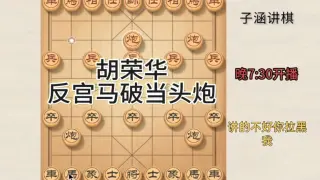
Shenzhen Xiangqi Culture Museum ↗Reverse Palace Horse: an opening becomes a method
The point is not to memorize an opening label. Hu’s lasting contribution was to show how horses, cannons, and rooks could preserve counterplay, wait for a structural weakness, and turn a defensive setup into active play—then leave that thinking for later players to test.
Public player record ↗The 1980s: the board gets wider
The 1984 Asian event record and the 1988 international title place Hu’s career beyond the national individual championship. This does not mean he won every international event; it shows his games, status, and ideas were now traveling across a larger Xiangqi world.
World Xiangqi Federation title list ↗Winning again at 55: what experience actually does
A title in 2000 cannot be explained by “more experience” and left there. Judgment, timing, stamina, and endgame technique are quiet resources; they become visible only when a critical position asks a player to keep making good decisions.
General Administration of Sport ↗From chasing titles to building a team
Shanghai won the first national league title in 2003, and its professional men’s team won a national mind-sports team title in 2011. By then Hu’s influence was measured not only by his own results, but by how he led, trained, and prepared the next group.
Sport administration and Sina Sports ↗A profile needs one loss
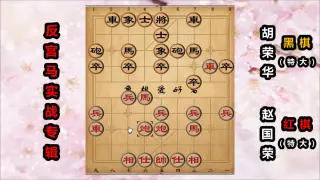
The five-game sample is not a highlight reel. It includes Hu’s 1987 loss to Zhao Guorong, because wins and losses together show when a second-player system generated counterplay—and when it still had to solve the opponent’s initiative move by move.
Sachess editorial selection ↗The first board was in Shanghai’s streets
Hu’s career did not begin at a trophy table. Oral histories place his early chess world in 1950s Shanghai, where street games, lane-side chess stalls, and a dense fan culture made strong opposition part of everyday life. That background helps explain how a child learned to turn “knowing the moves” into the stamina required for a long run of serious games.
Hu Ronghua oral history: Shanghai Xiangqi over seventy years ↗Mentorship was a daily practice, not just a list of names
Early accounts mention teachers such as Dou Guozhu and Xu Daqing, but the useful detail is the training environment: watching strong players, listening to explanations, replaying positions, and testing ideas in real games. The relationship between a young player and an older master was built through repeated contact, not a single ceremonial act of apprenticeship.
Shanghai Academy of Culture and History: Hu Ronghua oral history ↗1960: a title and a new institutional era
The title at 15 is a personal record, but 1960 also matters because Shanghai’s chess institutions were beginning to take training and transmission seriously. Player development and organization grew together. Later Shanghai teams did not emerge from one prodigy alone; coaches, academies, players, and the city’s chess culture formed a system around the talent.
General Administration of Sport: Shanghai Chess Academy anniversary forum ↗After 1964, he changed how he studied
Xu Tianli’s oral-history assessment treats the years around 1964 as a turning point. Hu was no longer only absorbing established ideas; he was recombining openings, tactics, and opponent-specific plans. The modern way to describe it is curiosity about positions other players might dismiss: could a quiet first move change the middlegame tempo? That habit later appeared in Flying Elephant, Reverse Palace Horse, and other unusual systems.
Shanghai Academy of Culture and History: Hu Ronghua oral history ↗The “ten-title run” belongs on a calendar
The ten national-title years are 1960, 1962, 1964, 1965, 1966, 1974, 1975, 1977, 1978, and 1979. “Ten-title run” describes long control of the national scene; it does not mean ten uninterrupted annual tournaments. Listing the years makes the achievement clearer: Hu had to rebuild his edge against new opponents and changing competitive conditions.
Wikipedia and Baidu Baike: Hu Ronghua results tables ↗Reverse Palace Horse made defense an active choice
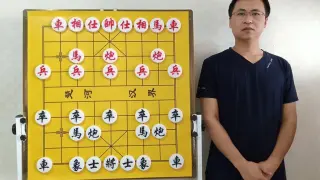
Reverse Palace Horse is more than an opening label. Against the direct pressure of a central cannon, Black keeps counterplay through the placement of horses, cannons, and rooks. The position may look compact, but it is waiting for a pawn shape or piece placement to become vulnerable. The published opening studies show a two-step contribution: play the idea in competition, then turn experience into knowledge others can test.
World Xiangqi Federation: Reverse Palace Horse bibliography ↗The Wuyang Cup gave champions another public stage
The Wuyang Cup was not an ordinary points league. It brought former national champions into a concentrated, high-attention event. Hu’s six recorded wins—late 1981, 1985, twice in 1986, 1988, and 1996—do not replace his national titles, but they add evidence about competitive longevity: he could still find winning chances in short formats against a changing generation.
XiangqiPu: Wuyang Cup winners ↗The road from China to the world was gradual
The 1984 Qixing Cup and Asian Cup games show Hu dealing with cross-regional opposition. The 1986 Asian Xiangqi Stars visit to North America connected players with promotion and cultural exchange. The World Xiangqi Federation’s results then record him as men’s individual runner-up and a team champion at the first World Xiangqi Championship in 1990. Together, these are more precise than simply calling him internationally influential.
World Xiangqi Federation: World Championship results; Xinmin Evening News retrospective ↗Blindfold play turned interruption into training
Biographical summaries often mention Hu’s blindfold and blindfold simultaneous play. The more interesting point is why it mattered: when normal team activity was disrupted, memory, calculation, and replay could become a private training ground. In a 1977 Macau exhibition he played four opponents, scoring two wins and two draws. The feat was not only about memory; it was a way to keep testing visualization when ordinary competition was unavailable.
Wikipedia: Hu Ronghua playing style; Baidu Baike references ↗1997 and 2000: the veteran returned to the top
A national title at 52 in 1997 and another at 55 in 2000 should not be treated as two isolated age records. They are the late chapters of a long adaptation: as younger players approached in speed and fitness, Hu shifted more weight toward preparation, judgment, tempo control, and endgame technique. The unusual tension is that the same player appears in both the youngest and oldest champion stories.
General Administration of Sport and Shanghai Chess Academy public records ↗The “15th title” in 2006 needs an event label
Some reports call Hu’s 2006 national ranking-tournament win a 15th national individual championship, while official national individual-title lists usually total 14. The difference is classification: the ranking tournament was a separate event for champions and high-rated players, not the same competition as the men’s national individual championship. Keeping both records with their categories is more honest than forcing one number to erase the other.
Sohu Sports: 2006 ranking tournament; Shanghai Chess Academy records ↗From an academy title to a succession system
Hu’s role at the Shanghai Chess Academy cannot be reduced to the word “director.” Reports about his 2005 departure describe an organization that needed younger players and stronger management habits. His work included preparing successors and gradually handing responsibility to people who could run the system. Team leadership, in this sense, meant building continuity rather than only giving advice beside a board.
Sina Sports: Hu Ronghua leaves the Shanghai Chess Academy ↗Developing young players made the legacy leave his own games
Reports from around 2000 place players such as Sun Yongzheng, Xie Jing, and Wan Chunlin in Shanghai’s development story. The important point is the pipeline: put young players into strong team events, review the critical games, then give them room to compete for titles on their own. Hu’s influence moved from “what can I win?” toward “can the next generation build its own game?”
Sina Sports: Hu Ronghua’s academy and player development; XiangqiPu: Xie Jing profile ↗Books kept the ideas from belonging only to spectators
Collections such as Reverse Palace Horse, Hu Ronghua’s Flying Elephant Hundred Games, his self-annotated games, and the craft of the ten titles do more than repeat a trophy list. A bare score tells us who won; an annotation asks why a retreat, exchange, or waiting move mattered in that structure. Writing was another way for a player who crossed print, television, and the internet to turn experience into public study material.
Wikipedia bibliography; World Xiangqi Federation chess-book references ↗“Commander Hu” was built by chess and circulation
“Commander Hu” was not only a media nickname attached to a champion. It drew on his attacking presence and long dominance, then gained staying power through television, event reporting, and repeated retelling among fans. A CCTV feature and later Wuyang Cup retrospectives show how player, event, sponsor, and public culture kept giving the name new context.
World Xiangqi Federation materials; Xinmin Evening News Wuyang Cup retrospective ↗The Shanghai team record adds a second career line
Seen only through national individual events, Hu can look like a champion standing alone. Team results reveal another tradition: Shanghai’s national team titles in 1960, 1979, 1986, 1991, and 1994. Team chess involves lineup decisions, opponent preparation, and turning one player’s discovery into shared preparation. Hu was a leading player, and gradually also a carrier of that collective method.
Chinese Wikipedia: Hu Ronghua; Shanghai Chess Academy records ↗1982 to 1988: titles changed the scope of the job
The Chinese Xiangqi grandmaster title in 1982 and the international title record in 1988 are often listed as two honors. They also mark a wider working identity. One confirmed his domestic standing; the other arrived as international events, overseas exchanges, and world Xiangqi institutions were taking shape. “National champion” was no longer the whole job: representing China and helping the game travel mattered too.
Shanghai Chess Academy records; World Xiangqi Federation public records ↗The Wuyang Cup was also an event ecosystem
The Wuyang Cup grew through sponsorship, stronger prize money, invitations, and public attention. It gave champions a recurring stage outside the national individual event and connected players with business, local culture, and television. Hu’s repeated wins were sporting results, but the event also helped make him one of the faces through which Xiangqi reached a wider audience.
Xinmin Evening News: Hu Ronghua, Wuyang Cup, and Huo Yingdong ↗The shift to administration happened in ordinary work
Hu’s later career was not simply a retreat from competition. Around his academy leadership he still had to deal with training plans, event preparation, young-player development, and the distribution of institutional resources. Shanghai’s 2003 league title shows personal authority becoming a team result; leaving the director role in 2005 shows that a title is temporary, while useful training habits can outlast it.
Sina Sports: Hu Ronghua leaves the academy; Sina league archive ↗Self-annotation preserves the question behind the move
Titles tell us where Hu won. Self-annotation asks what happened in the middle: was a move seeking the initiative, avoiding the opponent’s initiative, simplifying, or changing a piece’s future square? Once those questions are written down, a famous game becomes something readers can test again rather than a story passed around from memory. That is the most useful model for Sachess game profiles.
Wikipedia bibliography; World Xiangqi Federation chess-book references ↗The “outside-the-board move” story needs careful labels
A 1965 game against Wang Jialiang is often discussed through a psychological story: Wang was better, later captured a cannon, and then met a sharp counterattack. Later recollections add that Hu delayed, looked at another board, or returned with a deliberately regretful manner. The published record is not enough to call this an official violation. The responsible approach is to label it as a circulating psychological-war anecdote, then let the actual sacrifice, recapture, and counterplay be checked on the board.
The Paper: 1965 game retrospective; XiangqiPu secondary account ↗